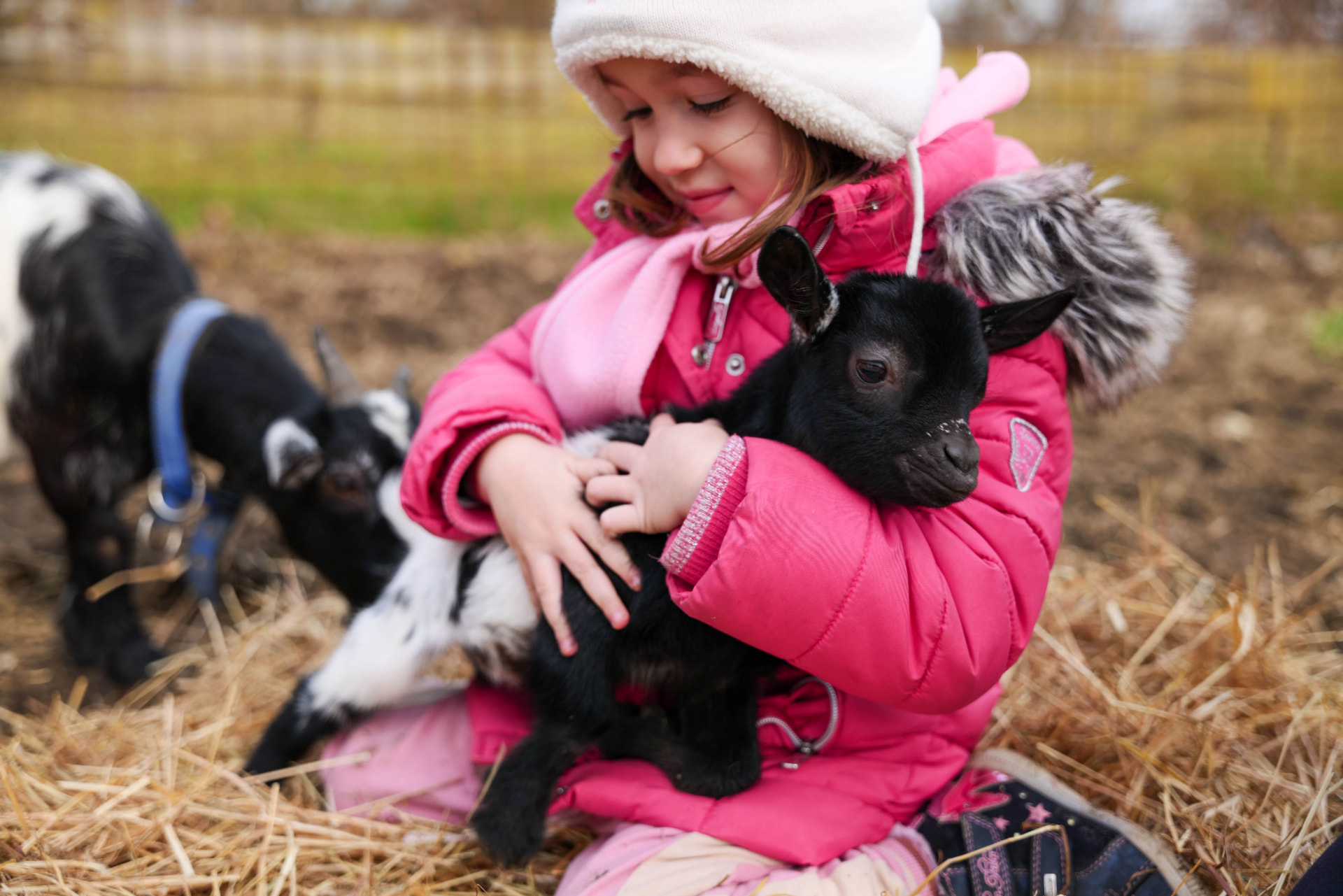
If there's one thing every homeschooling parent on the Peninsula knows, it's that some of the richest lessons don't happen at a desk. They happen with mud on your boots and a bottle-fed lamb in your arms.
The Mornington Peninsula has an unusually high concentration of working farms, wildlife sanctuaries and animal-education venues that welcome home educators, and most of them are already set up for exactly the kind of hands-on, child-led, curriculum-flexible learning our community values. Life cycles, ecosystems, food systems, animal husbandry, sustainability, fine motor skills, responsibility, empathy: a single farm visit can tick off more outcomes than a week of worksheets.
We've pulled together ten of our favourites, from Boneo to Tyabb, so you can start building your term's excursion list. Pop the kettle on, grab a notebook, and start planning.
(Always confirm current opening days, booking requirements and pricing directly with each business before you visit, as details can change seasonally.)
1. Little Farmers - Boneo
What it is: A child-led "farm school" on a private five-acre property on Browns Road, Boneo, run by Farmer Shel and Farmer Billie. Little Farmers began as a playgroup and has grown into a genuine farm-school program for ages roughly 1–9, blending nature play, farming, crafts and free exploration.
Why it works for homeschoolers: The whole philosophy is gentle and child-led, with no rigid itinerary, so kids move at their own pace between animal care, the cubby house, the market stall and garden beds. Sessions touch on growing food, composting, the circle of life, sustainable living, animal care, food preservation, beekeeping and soil health: a genuinely rich, ready-made unit study in a single visit.
Learning connections: Life cycles and ecosystems, sustainability, food systems, sensory and fine-motor development, social-emotional skills through cooperative play.
Good to know: Bookings via their program calendar; suited to littles right through to early primary.
Website: Book via Bookwhen Instagram: @browns.road Phone: 0432 342 285 Email: littlefarmers@mail.com
2. Rain Hayne & Shine Farmyard - Balnarring
What it is: A working farmyard experience offering hands-on encounters with farm animals, guided tours and the classic (and always popular) bottle-feeding sessions.
Why it works for homeschoolers: Bottle-feeding and up-close animal handling are a fantastic entry point for younger children into responsibility and animal welfare: real, tangible cause and effect that no textbook can replicate. Older kids can extend the visit into research on animal husbandry, breeds and farm operations.
Learning connections: Animal care and welfare, responsibility, biology basics (mammal life cycles, nutrition), practical maths (feeding schedules, quantities).
Good to know: Best suited to a term-based excursion for mixed-age homeschool groups; check current tour times.
Website: rhsfarm.com.au Instagram: @rainhayneshine Phone: (03) 5983 1691
3. The Big Goose Adventure Farm & Wildlife Park - Moorooduc
What it is: A combined farm-and-wildlife-park experience with both introduced farm animals and native Australian species, plus scheduled reptile and sheepdog shows.
Why it works for homeschoolers: This one's a two-for-one: compare and contrast farm animals with native wildlife (wombats included) in the same visit. The scheduled shows give structure to the day, which is useful if you're homeschooling a group and want a set program to anchor the trip around.
Learning connections: Native vs introduced species, Australian biodiversity, animal classification, working dog behaviour and training, reptile biology.
Good to know: Show times are scheduled, so plan your visit around them rather than turning up unannounced.
Website: thebiggoose.com.au Instagram: @thebiggoose_ Phone: 0459 911 549 Email: fun@thebiggoose.com.au
4. The Funky Farm - Hastings (bookings only)
What it is: A wildlife rescue and conservation-focused farm offering education around rescued animals and conservation practice.
Why it works for homeschoolers: This is your go-to for a genuine conservation and animal-welfare unit. Rescue stories give children a real-world, age-appropriate way into bigger conversations about habitat loss, injury, rehabilitation and why wildlife carers matter.
Learning connections: Conservation and ethics, wildlife rehabilitation, empathy-building, environmental science.
Good to know: Bookings only. This isn't a drop-in venue, so it's worth organising as a small-group homeschool excursion booked well ahead.
Website: thefunkyfarm.com.au Facebook: The Funky Farm Bookings: Contact form
5. Pitchingga Ridge Alpacas - Red Hill
What it is: A working alpaca farm covering breeding, husbandry and fibre production.
Why it works for homeschoolers: Alpacas are a brilliant, low-intimidation entry point to livestock farming for younger or more nervous kids. The fibre angle also opens the door to a hands-on textiles and "farm to product" unit: from raising the animal through to shearing, processing and using the fleece.
Learning connections: Animal husbandry, textiles and fibre arts, small-business/agribusiness basics, farm-to-product supply chains.
Good to know: Great add-on to a design/textiles term if you're running a "where do materials come from" unit.
Website: pitchinggaridge.com.au Phone: (03) 5989 2866
6. Hawkes Farm - Boneo
What it is: A working farm growing seasonal crops, with a focus on food production and farm-to-table learning.
Why it works for homeschoolers: Where farm-yard animal visits teach animal care, Hawkes Farm rounds things out with the plant side of food systems: seasonality, crop cycles and what "farm to table" actually looks like from soil to plate.
Learning connections: Botany and plant life cycles, seasonal food systems, sustainability, nutrition and food origin.
Good to know: Pairs well with Little Farmers or Pure Peninsula Honey for a full "where does our food come from" term.
Website: store.hawkesfarm.com.au Facebook: Hawkes Farm Instagram: @hawkesfarm
7. Pure Peninsula Honey - Moorooduc
What it is: A local honey producer offering insight into bees, pollination, ecosystems and honey production.
Why it works for homeschoolers: Bees are one of the most powerful "small creature, big impact" science lessons available. A single visit can cover pollination, ecosystem interdependence, colony structure and social insect behaviour: genuinely advanced ecology concepts made completely accessible to a seven-year-old.
Learning connections: Ecosystems and pollination, insect biology and social structures, sustainability, small-scale food production and local economy.
Good to know: A natural fit for a spring science term when pollination is at its peak.
Website: purepeninsulahoney.com.au Instagram: @purepeninsulahoney Phone: (03) 5978 8413 Email: enquiries@purepeninsulahoney.com.au
8. The Briars Wildlife Sanctuary - Mount Martha
What it is: A 230-hectare Mornington Peninsula Shire conservation precinct at Mount Martha, home to a wildlife sanctuary, wetlands, an historic homestead, an eco-living display centre and structured education programs, plus school-holiday activities and geocaching trails.
Why it works for homeschoolers: The Briars is the most "curriculum-ready" venue on this list. Between the wildlife sanctuary, walking trails, wetlands, heritage homestead and eco-living centre, you can build an entire term around it: ecology one visit, colonial history the next, sustainability the one after that.
Learning connections: Native ecosystems and conservation (including active reintroduction programs for locally endangered species), Australian colonial history, sustainability and eco-living, geography and orienteering via the site's geocaching trail.
Good to know: Free entry to the park and Visitor Centre, with paid activities and the Outdoor Education Camp available for group bookings.
Website: mornpen.vic.gov.au/Environment/The-Briars Facebook: The Briars Visitor Centre phone: (03) 5974 3686
9. The Ranch Mornington Peninsula - Boneo
What it is: A ranch-style farming and land-management experience covering animals and broader property/land management.
Why it works for homeschoolers: Where most farm visits focus on individual animals, a ranch setting is a good way to introduce the bigger picture: how land is managed, rotated and cared for across a whole property, not just a single paddock.
Learning connections: Land management and sustainability, animal husbandry at scale, geography (property layout, land use planning).
Good to know: Good option for upper-primary and secondary homeschoolers ready to think beyond "patting the animals" into how a working property actually runs.
Website: theranchmp.com.au Phone: (03) 5988 6262
10. Woolumbi Farm - Tyabb
What it is: A small-scale farm experience, ideal for a lower-key, less crowded introduction to farm life.
Why it works for homeschoolers: Small-scale farms are often the most accessible for larger homeschool co-op groups or families with younger or more sensory-sensitive kids, thanks to fewer crowds and more one-on-one time with animals and space.
Learning connections: Introductory animal care, small-scale/hobby farming versus commercial agriculture, sensory and nature play.
Good to know: Worth reaching out directly to ask about group rates for homeschool co-ops.
Website: woolumbi.com Phone: 0417 523 173 Email: sonya@woolumbi.com
Building Your Term Around These Visits
A few ways homeschool families on the Peninsula are already using farm excursions like these:
- A "Where Does Our Food Come From" unit: Hawkes Farm (crops), then Pure Peninsula Honey (pollination), then Little Farmers or Rain Hayne & Shine (animal products), then a home cooking session using what you learned.
- A native vs introduced species comparison: The Big Goose, then The Briars, then a nature journal comparing what you saw at each.
- A conservation and ethics term: The Funky Farm, then The Briars' reintroduction programs, then a family discussion or project on local wildlife protection.
Know a Farm We Should Feature?
Farms, wildlife parks and animal-education providers are some of the most-requested listings from local families on Homeschool Central. If you run one of the businesses above, we'd love for you to list your business with us. And if we've missed your favourite Peninsula farm experience, let us know.
Homeschooling on the Peninsula? Browse all local classes, camps and providers at homeschoolcentral.com.au, or tag us @homeschoolcentral.com.au in your next farm-day photos. We love sharing them with the community.
Homeschool Central is Australia's dedicated platform connecting homeschool, unschool and world school families with local classes, camps, events and providers.